How professional staging drives real estate results
Two identical homes in the same neighborhood on the local real estate market, listed in the same week, at the same price. One sells in three weeks with multiple offers. The other sits for four months and eventually takes a price cut. Presentation is often the deciding factor in differing sale outcomes for otherwise similar homes, and the gap between those two results is almost always determined before the listing goes live.
Professional staging and interior design aren’t decorating upgrades for sellers with extra budget. They’re strategic tools that change buyer behavior, shorten time on market, and directly influence the number on the final contract. Classy AF Interiors was built around this exact idea: bridging the gap between how a home looks when you live in it and how it needs to look when you sell it. By the end of this article, you’ll understand exactly how design and staging intersect with residential real estate success, and what to do about it before your listing goes live.
Why first impressions now happen before the front door
According to the National Association of Realtors, 93% of recent buyers use the internet at some point during their home search, and 87% of buyers rate listing photos as the most useful feature on a real estate website. That means the listing photo isn’t a supplement to the showing. For many buyers, those listing photos function as the first showing. Homes that photograph poorly get filtered out in seconds, not because the property lacks value, but because the visual presentation didn’t earn a second click.
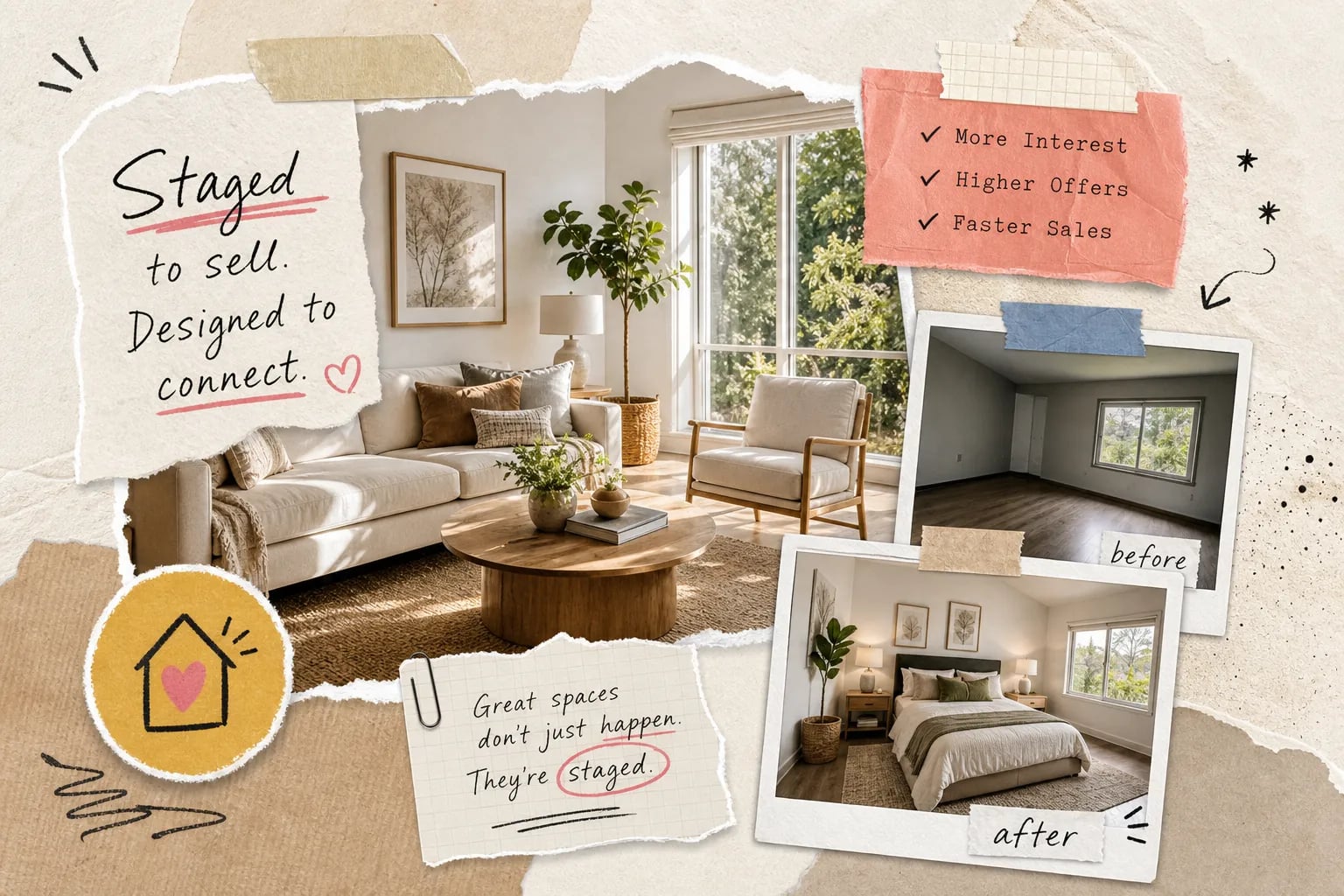
Staging and design work specifically changes what the camera captures: proportion, light, flow, and the feeling of a space that’s ready to be lived in. A cluttered room reads as small. An empty room reads as cold and echo-prone. A professionally staged room reads as aspirational, and that emotional response is what converts a scroll into a showing request.
Buyers don’t consciously think “this home is staged well.” They think “I can picture my life here.” Staging professionals consistently attribute this response to intentional furniture placement, curated accessories, and a neutral palette that feels warm without feeling personal. Professional presentation removes distraction and allows the buyer to project themselves into the space. This psychological shift is exactly what leads to serious offers in a competitive real estate market.
What the data shows about staging and days on market in the real estate market
NAR findings on staging speed
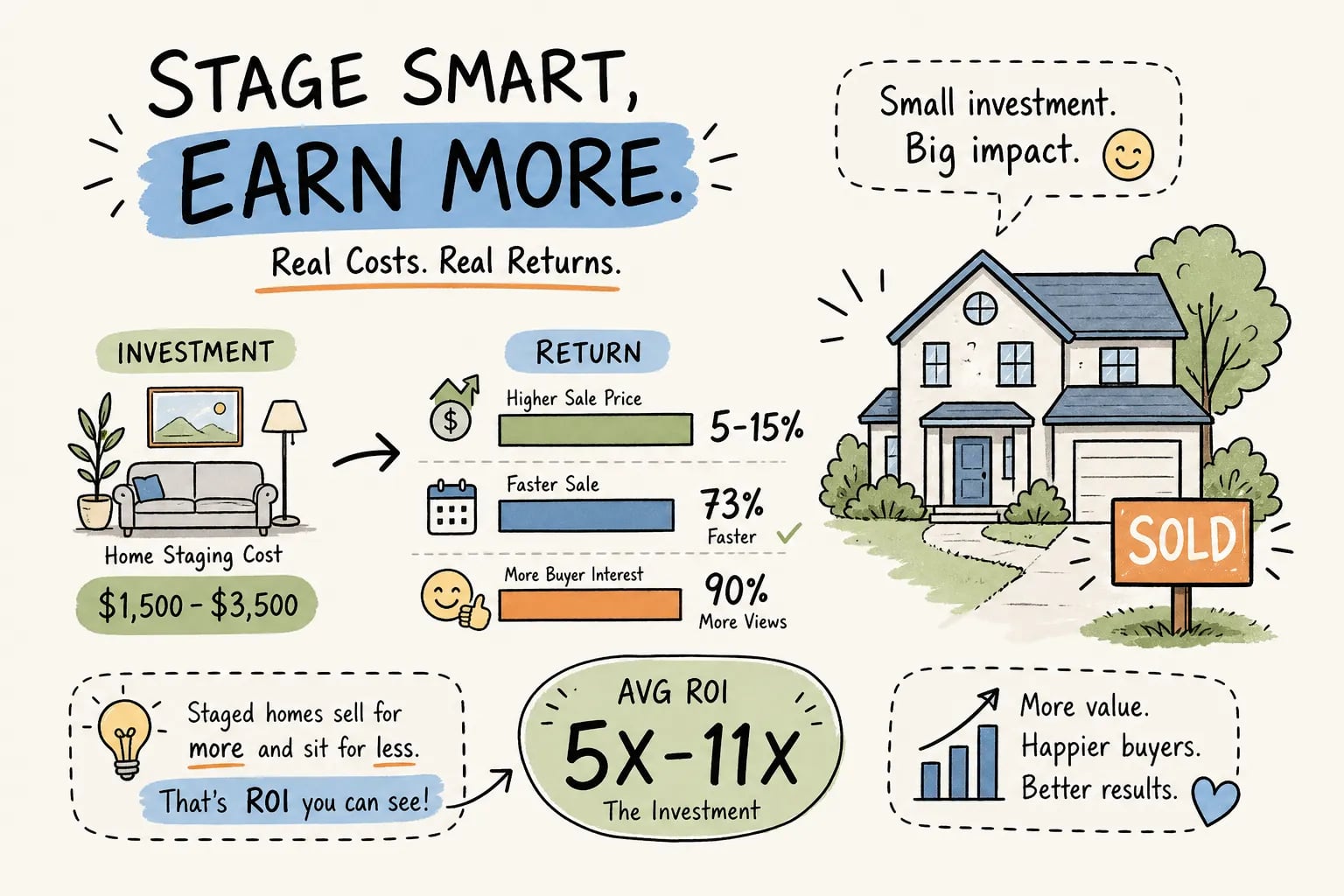
The research on this is consistent and striking. NAR-cited staging research shows that professionally staged homes received offers within 26 days after being listed, while the same homes had previously sat an average of 166 days before staging. Additional NAR-cited data shows 94% of staged homes selling in 29 days or less, compared to 145 days for non-staged homes. That isn’t a marginal improvement. It’s a category shift in how quickly a home moves.
Days on market impact on seller outcomes
In competitive residential real estate markets, that speed advantage compounds. Fewer days on market means fewer price reductions, less negotiating pressure from buyers who sense a seller growing anxious, and cleaner closings with less friction. Every additional week a home sits on the market costs the seller money in carrying costs, mortgage payments, and lost leverage at the negotiating table.
There’s also a stigma problem that sellers often underestimate. A listing that lingers can develop a negative reputation in the local market. Buyers start asking what’s wrong with it. Price reductions signal desperation. Staging isn’t just about aesthetics; it’s a risk-management tool that protects the seller’s timeline and negotiating position from the moment the listing goes live.
How professional presentation affects your real estate sale price
Industry research consistently shows that staged homes sell for 1% to 5% more than comparable unstaged homes. On a $600,000 home, that’s $6,000 to $30,000 in additional sale proceeds, often returned on a staging investment that costs a fraction of that amount. In Southern California’s competitive housing market, where comparable homes frequently sell within days of each other, presentation becomes a meaningful differentiator at the offer table.
The reason buyers pay more for staged homes comes down to perceived effort and move-in readiness. A buyer standing in a beautifully presented home isn’t just reacting to the furniture. They’re mentally calculating how much work they won’t have to do after closing. Homes that feel curated and complete trigger a willingness to pay a premium because the buyer perceives lower friction ahead. Professional staging communicates that the seller has taken care of the property, which directly increases buyer confidence and offer strength.
For context, professional staging in Orange County typically runs $500 to $2,500 for occupied homes and $2,500 to $7,500 or more for vacant properties. Against a potential five-figure return on sale price, that investment calculus is straightforward for most sellers in the Southern California real estate market.
Interior design and home staging are not the same service
This distinction matters because sellers often confuse the two, or assume one replaces the other. Interior design is about creating a living environment tailored to the occupant: selecting furniture, finishes, lighting, and layout for long-term livability. Home staging is about preparing a property for sale by appealing to the broadest possible buyer pool, often depersonalizing the space and selecting pieces that photograph well and read as aspirational. The goals overlap in some areas, but the strategies are different.
A home that’s beautifully designed for the seller’s personal taste may still need strategic staging to translate for buyers who have different preferences. The seller’s carefully curated gallery wall and bold accent colors might feel authentic and lived-in. To a buyer trying to visualize their own life in the space, those same choices can feel like obstacles. Staging neutralizes those barriers without requiring the seller to gut the design work they love.
Sellers who are still living in the home often need a hybrid approach: refreshing the interior design where it’s dated or overly personal, then staging key rooms to create that buyer-ready feel. Vacant homes frequently benefit from full staging to avoid feeling cold and lifeless in listing photos, a pattern that NAR-cited research and staging professionals consistently support. Investment properties and real estate flips benefit from fast, cost-effective design decisions that signal quality without overspending. Knowing which service applies to your situation is the first decision to make, and it’s one a qualified professional can answer in a single walkthrough.
Why a full-service studio gives sellers a measurable edge
When sellers hire an interior designer and a stager separately, they risk conflicting recommendations, scheduling gaps, and a fragmented process that adds time to an already compressed listing timeline. The design team selects finishes the stager has to work around, the stager brings furniture that fights the existing aesthetic, and the result is a home that feels assembled rather than intentional, a disconnect buyers pick up on faster than sellers expect.
Classy AF Interiors was built specifically to address this challenge. As a full-service interior design and home staging studio serving Southern California from Los Angeles to Palm Springs, the studio handles both sides of the equation: designing spaces that work for the sellers living there now and staging them strategically for the buyers who need to see themselves living there next. This single-partner approach aims to deliver a consistent aesthetic, a tighter timeline, and a presentation strategy aligned with the real estate sale goal from listing to closing.
For sellers in Orange County and the surrounding markets, having one trusted studio coordinate both functions removes a significant layer of stress from an already complex process. No vendor handoffs, no conflicting recommendations, and no gaps in the visual story the home tells from the first listing photo to the final walkthrough.
The highest-ROI pre-listing moves before you go live
You don’t need a full renovation to present a home well. NAR-cited research and Southern California real estate market data consistently point to the same categories of high-return pre-listing work: exterior curb appeal, light kitchen and bathroom refreshes, neutral interior paint, flooring touch-ups, and professional staging. These aren’t gut-renovation projects. They’re targeted, visible improvements that change how a home photographs and how buyers feel when they walk in.
The specific upgrades that return the most in the Southern California market include:
- Neutral interior paint, which is one of the most cost-effective ways to make a home feel move-in ready and photograph cleanly
- Flooring repairs and refinishing, which show up clearly in listing photos and in person
- Minor kitchen updates such as cabinet hardware, backsplash, and faucet replacements
- Bathroom refreshes covering fixtures, mirrors, caulk, and vanity updates
- Professional staging that declutters, depersonalizes, and creates aspirational room compositions
Classy AF Interiors operates with a “Ballin’ on a Budget” philosophy: delivering high-impact, photo-ready presentation without requiring sellers to overspend on changes that won’t return value at closing. The studio’s pre-listing process starts by identifying the high-impact areas first, the spaces that drive buyer decisions, and separating them from the rooms where investment won’t move the needle. That assessment shapes the scope, the budget, and the timeline so nothing is wasted before the listing goes live.
Start here before your listing goes live
The biggest mistake sellers make is assuming they already know which rooms need work. Assumptions lead to money spent in the wrong places and corners cut in the areas that actually matter to buyers. A professional pre-listing walkthrough changes that. It identifies exactly where the presentation gaps are and gives sellers a prioritized plan they can execute on budget and on schedule.
The residential real estate market rewards sellers who get the presentation right before launch, not after a listing stalls. Whether you’re preparing a family home in Orange County, staging an investment property in Los Angeles, or getting a vacation property in Palm Springs ready to sell, the approach is the same: presentation first, listing second. Classy AF Interiors brings design expertise and staging strategy under one roof so sellers walk into the real estate market with every advantage working in their favor.
A free consultation is the fastest way to find out exactly where your dollars will do the most work before your listing goes live. Reach out to the team to schedule yours, and go to market with a presentation that’s built to perform from day one.