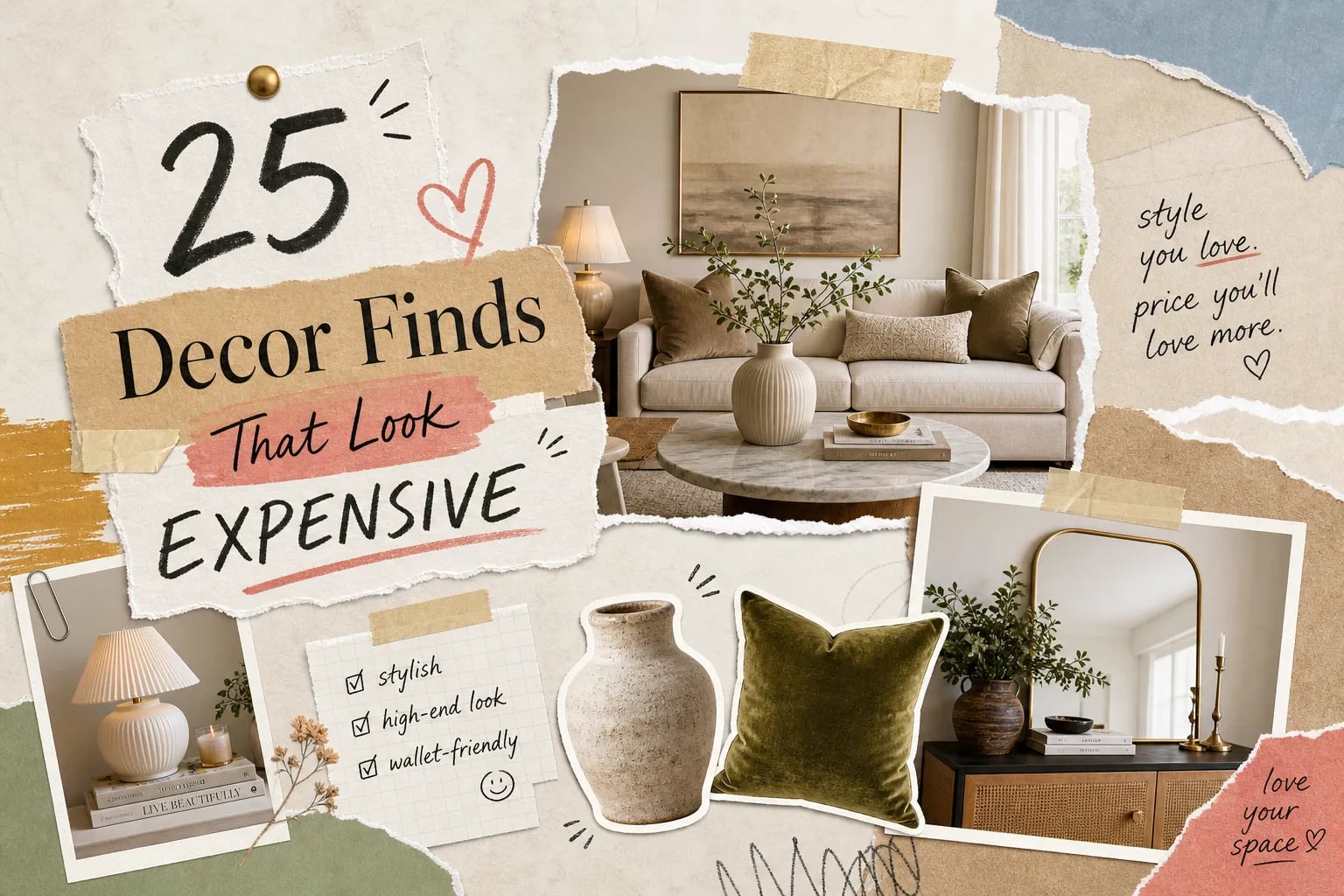
25 Affordable Home Decor Finds That Look Expensive
Nobody who has walked into a beautifully styled home has ever asked how much the owner spent. They notice the light, the textures, the way the room feels pulled together, and they assume it cost a fortune. The truth? Most of those rooms were built on affordable home decor chosen one intentional piece at a time. That’s the whole idea behind Classy AF Interiors’ “Ballin’ on a Budget” philosophy: the right piece in the right spot does more work than ten expensive ones placed without intention.
Here’s exactly what you’re getting from this article. First, 25 specific budget decor pieces to buy right now, organized by category so you can shop strategically. Second, a guide to where you’ll actually find these items at the lowest prices, because knowing what to buy and knowing where to get the deal are two different skills. Third, the styling principles that make a $15 find read like a $150 one, borrowed straight from professional staging and interior design practice.
Affordable home decor: the high-impact finds you should shop first (items 1, 12)
Interior designers consistently start with the same categories: pieces that change how light moves, how tall a room feels, and how layered a space reads, without touching the furniture or the paint. These affordable decor ideas punch well above their price tags because they affect the room’s atmosphere, not just its surface. Start here before you buy anything else.
Mirrors and lighting that change how a room reads
Mirrors and lamps are the two most universally recommended upgrades in professional design, and for good reason. Mirrors reflect both natural and artificial light, making rooms feel larger and more luminous. The right lamp shifts a space from flat and overhead-lit to warm and dimensional, the difference between a room that looks furnished and one that looks designed.
- Round arch mirror ($15, $45): Look for a clean, thin frame in gold, black, or natural wood. Arch and sunburst styles feel current and work in nearly every style.
- Sunburst or starburst mirror ($20, $50): The radiating frame adds visual interest without requiring any other wall decor nearby. Prioritize a finish that doesn’t look overly shiny or plastic.
- Table lamp with a textured base ($20, $50): Look for a ceramic or ribbed base paired with a linen or drum shade. Avoid overly bulbous shapes; a simple silhouette reads more expensive.
- Plug-in sconce ($25, $50): No electrician needed. A corded plug-in wall sconce adds layered lighting to any room and works especially well flanking a bed or a mirror.
- Flameless pillar candles, set of 3 ($18, $30): Realistic flicker effect, no fire risk, and they make any surface look intentionally styled. Look for ones with a matte wax finish rather than a glossy surface.
Pillows, throws, and curtains that add instant texture
Fabric texture is one of the fastest signals of luxury, and one of the most affordable to replicate convincingly. Velvet, linen, and chunky knit read rich in person and in photos, regardless of what they actually cost. Curtains hung high and wide are the single most-mentioned designer trick for making a room feel taller and more finished.
- Velvet or linen throw pillow covers ($8, $20 each): Buy covers, not inserts. Swap the covers seasonally for a completely different look with the same inserts underneath.
- Chunky knit throw blanket ($25, $45): Draped over a sofa arm or chair, a chunky knit adds warmth and texture instantly. Avoid anything that looks too synthetic or that pills quickly.
- Waffle-weave cotton throw ($20, $35): A subtler option than chunky knit, and it reads beautifully in online listings and real estate photos.
- Linen-blend curtain panels ($25, $50 per panel): Hang the rod 2, 4 inches below the ceiling and extend it 6, 12 inches wider than the window on each side. Floor-length panels in a natural linen or white tone make any room feel bigger and more elevated.
Area rugs under $50 worth actually buying
Even a 4×6 rug placed under a coffee table anchors a seating area and makes the whole room feel more intentional. Without a rug, furniture floats. With one, it’s a room. For deals, check the clearance racks at At Home and watch Wayfair’s flash sales, where smaller rugs frequently land well under $50.
- Jute or seagrass runner ($30, $50): Works in entryways, kitchens, and hallways. The natural fiber texture adds warmth and has a grounded, organic quality that reads well in any setting.
- Low-pile printed accent rug, 3×5 or 4×6 ($25, $50): Look for a flat or low pile weave that won’t show every footprint and works well under furniture legs without bunching.
- Layered rug option, vintage-look kilim or patterned flat-weave ($30, $50): Layer a smaller patterned rug on top of a larger neutral one for a collected, designer look that costs far less than buying one statement rug.
Finishing touches that make a room look curated, not random (items 13, 25)
This is the vignette layer: the smaller objects and wall pieces that signal someone with taste lives here. Most people skip this step and wonder why their room feels incomplete even after new furniture. Designers obsess over it. Once the structural pieces are in place, these affordable decor ideas are the finishing details that close the gap.
Tabletop vignette pieces and shelf decor
A tray makes any grouping look deliberate. Odd-numbered arrangements instantly read as styled. Matte ceramic, travertine-look resin, and natural fiber are the materials that read most expensive at low cost. Keep price expectations realistic: most excellent tabletop finds land between $8 and $35.
- Matte ceramic vase ($12, $30): A simple matte finish in white, cream, or terracotta looks far more expensive than shiny glazed alternatives. Works with faux or real stems.
- Stone-look or travertine-style resin tray ($15, $35): The stone-look surface brings a tactile, elevated quality to any coffee table or ottoman, and the material itself photographs particularly well.
- Sculptural candleholder ($10, $25): Look for interesting silhouettes: geometric, twisted taper, or organic shapes in matte black or warm gold finishes.
- Woven seagrass basket ($12, $30): Functions as storage and decor. Use it to hold throw blankets, magazines, or as a planter liner. Natural texture adds warmth instantly.
- Decorative tray ($15, $30): Round or rectangular, in a neutral tone or a warm metal. This is the piece that corrals three random objects into a styled grouping, the functional foundation of any good vignette.
- Small sculptural object with an interesting silhouette ($8, $25): A stone-look sphere, a small abstract figurine, or an organic ceramic shape. One unexpected object per surface is enough.
- Stack of coffee table books ($15, $30 for a set of 3): Use them as risers for other objects, and they double as decor. Look for spines that coordinate with your palette.
Wall art and framed prints under $50
The frame matters more than the print. A simple black or natural wood frame elevates almost any image, and a well-chosen frame from a discount retailer is often indistinguishable from one that cost three times as much. DIY printing and framing can produce a designer-looking piece for under $20, especially when you use a digital download from Etsy and a frame from Target or IKEA.
- Printable digital art with a simple frame ($10, $20 total): Download a line-art print from Etsy, print it at a local shop, and frame it. The result looks intentional and custom.
- Simple line-art or abstract print in black or warm earth tones ($15, $40): Minimalist prints in consistent tones work across styles. Look for ones with enough scale to hold visual weight on the wall.
- Small gallery wall collection, 3, 5 coordinating frames ($20, $50 total): Match the frame finish, vary the print subjects slightly, and keep the wall arrangement tight. Gallery walls look expensive when the frames coordinate and the spacing is consistent.
Faux greenery and the hardware upgrade
Greenery adds life to a room and softens hard lines in a way no other decor category does. Faux greenery has gotten significantly more realistic, and at budget price points, the goal is finding stems with an organic, slightly imperfect shape rather than ones that look too perfect or too uniform.
Hardware is the other underused upgrade in inexpensive home decor: replacing the pulls and knobs on budget furniture is the fastest way to make a $50 dresser feel custom. For finishes that hold up over time and read well in photos, look for matte black, brushed gold, or unlacquered brass.
- Faux olive or eucalyptus stems ($10, $20 for a bundle): These are consistently top-recommended faux greenery options because the leaf structure looks natural and works in ceramic vases of any shape.
- Small faux succulent or trailing plant ($8, $18): Works in small spaces, bathrooms, and shelves where larger arrangements don’t fit. Look for ones with a matte, slightly varied green tone rather than a uniform, bright green.
- Replacement cabinet pulls or drawer knobs ($15, $40 for a set): Swap the hardware on any piece of budget furniture to immediately change its personality. Matte black and brushed brass are the two most versatile finishes across design styles.
Where the best affordable home decor deals actually live
Knowing what to buy is only half the equation. Where you buy it determines whether you pay retail or find the same quality for 40, 65% less. Here’s where the real deals on cheap decor finds and discount home accessories live, so you can stop scrolling and start finding.
Big retailers with the strongest clearance game
Target’s Threshold and Studio McGee lines consistently offer well-designed pieces at accessible prices, and the clearance section rotates reliably after major holidays. World Market carries artisan-inspired decor at price points that rival what you’d pay for a generic big-box version. At Home runs the deepest clearance of any major home decor chain, typically 40, 65% off at seasonal transitions, and the in-store clearance racks carry better deals than the website. HomeGoods follows a similar pattern: the deepest discounts appear post-Christmas and at seasonal transitions, without much advertising. H&M Home is worth checking for stylish basics, especially textiles, at consistently low everyday prices.
The key with all of these is timing. The best clearance windows land after major holidays and at the end of each season. Post-Christmas, mid-February, late April, after July 4th, and post-Halloween are the most reliable windows for discounted inventory in categories like mirrors, rugs, and lighting.
Online shops for unique, inexpensive finds
Etsy is one of the best sources for genuinely one-of-a-kind budget home decor, from handmade ceramics to vintage accents that don’t look like anything in a big-box store. When shopping smaller Etsy shops, filter for sellers with 200 or more reviews, recent feedback within the last 90 days, and clear return policies. Shipping timelines vary widely, so plan ahead if you’re decorating before a home goes on the market. Decor Steals rotates discounted inventory with direct-to-consumer pricing and no retail markup built in. Wayfair’s daily deals section is worth checking regularly for flash pricing on rugs, mirrors, and lighting that land well under standard retail.
Styling tricks that make $15 pieces look like $150
Well-chosen budget decor still falls flat if it’s placed without thought. These are the same principles used in professional home staging, and they apply regardless of what anything costs.
The rule of odd numbers and varied height
Groupings of three or five always look more natural and curated than even-numbered arrangements. The formula for a strong vignette: one tall element (vase, lamp, tall stem), one medium (book stack, small plant), one low (tray, candle). The height variation gives the eye somewhere to travel and makes the grouping feel considered rather than random. Apply this to bookshelves, coffee tables, and entryway consoles.
Layering and the one focal-piece rule
Pick one strong anchor item per surface or wall, a mirror, an oversized vase, a statement lamp, and let everything else support it rather than compete. Layering in practice means rugs on rugs, pillows in front of pillows, art propped in front of a styled shelf. Leaving breathing room around objects reads as more expensive than filling every inch of surface space. Restraint is the actual luxury signal.
Easy DIY swaps that add polish for almost nothing
Professional stagers don’t replace everything before a listing shoot. They upgrade what’s already there. The same logic applies to budget-conscious decorating: a few fast, inexpensive swaps close the gap between budget pieces and the look you’re after.
Paint and hardware: the biggest ROI upgrades
Spray painting frames, small accent pieces, and furniture in a unified finish pulls a room together faster than almost any other single move. Matte black, aged brass, and satin nickel are the finishes that look most expensive in person and hold up well over time. Budget about $10, $20 for a can of spray paint; the transformation on a $50 thrifted dresser or a dated frame is disproportionate to the cost. Hardware swaps, new pulls, knobs, and curtain rods, run $15, $40 for a set and visually transform any budget furniture piece into something that looks considered and intentional.
Grouping, trays, and the no-spend styling moves
Some of the most effective styling costs nothing at all. Edit surfaces down to fewer, better-placed objects. Use existing hardcover books as risers to add height to other pieces. Move lamps from room to room until you find the placement where the light actually works. Pull one color from an existing rug or art piece and repeat it in three spots around the room. Repetition of color and finish is what makes a space read as deliberately designed rather than assembled without a plan.
Frequently asked questions about affordable home decor
What is the best affordable home decor for making a room look expensive?
Mirrors, layered textiles, and statement lighting give you the most visual impact per dollar. A well-placed arch mirror, a set of linen-blend curtains hung high and wide, and a textured table lamp can transform a room before you spend a dollar on furniture. These are the categories professional designers reach for first when working with a tight budget.
Where can I find the best deals on inexpensive home decor?
At Home, HomeGoods, and Target’s clearance sections are the most consistent sources for quality pieces at steep discounts. For unique finds, Etsy’s smaller shops and Decor Steals offer budget home decor that doesn’t look like it came from a big-box store. Timing matters: the deepest discounts on all of these platforms fall after major holidays and at seasonal transitions.
How many affordable decor pieces do I need to update a room?
Three to five well-chosen pieces are usually enough to shift how a room reads. Pick one anchor item, a mirror, a rug, or a statement lamp, then layer in two to four smaller finds from the vignette and textile categories. Restraint produces better results than volume.
When your home needs a professional eye at a real-world price
Sometimes the right pieces are already in the room and it still doesn’t come together. That’s not a styling failure, that’s a signal the space needs a trained perspective. Knowing what to buy is learnable. Knowing what a specific room needs based on its light, its proportions, and its architecture is a different skill set entirely.
What a designer sees that you might miss
A trained eye catches scale relationships between furniture and the room that are easy to miss when you’re living in a space. It reads how natural light moves through the day and how that affects paint, finish, and fabric choices at different hours. It identifies traffic flow problems that no amount of new decor solves, and furniture placement patterns that make a room feel smaller than it actually is. These are the details that separate a room that looks “nice” from one that feels genuinely right.
How Classy AF Interiors makes high-end results feel accessible
At Classy AF Interiors, the “Ballin’ on a Budget” approach isn’t a discount tier, it’s the whole philosophy. The studio’s dual expertise in interior design and home staging means clients get one trusted partner who understands both how to live in a space and how to make it sell. That combination is rare in the Southern California market, where most firms specialize in one or the other. Whether you’re refreshing a room you live in every day or preparing a listing to move fast, the starting point is a free consultation with no pressure and no pretension.
The bottom line on affordable home decor
A polished, high-end-looking home is entirely achievable with affordable home decor when you know which pieces to prioritize, where to find the deals, and how to style what you buy with intention. The 25 finds in this article are a starting point, not a shopping cart to fill all at once. Pick one room. Choose three to five pieces from the categories above. Apply the styling principles before you spend another dollar.
If you get to the point where the pieces are there and the room still isn’t clicking, that’s exactly when a professional perspective pays for itself. Book a free consultation with Classy AF Interiors and get a trained eye on the space before you buy anything else. The goal is always the same: a home that looks like it cost a lot more than it did.